A few weeks ago, I was creating an account on X, formerly Twitter, for CANSPLA, mainly to post jobs listed on CANSPLA by recruiters.
What I encountered immediately after creating the account was disturbing.
The very first post shown on my feed was from a notorious insect-influenced political party spreading fake news. I continued scrolling for some time, only to find posts from Indian opposition parties, self-proclaimed YouTube journalists, paid tutors, and other accounts constantly critical of the current government or its achievments.
There was absolutely no post representing the other side of the political spectrum.
This was a completely new account. It had no browsing history, no political activity, and no previous engagement that could have helped the algorithm understand my political preferences. Yet, the platform had already decided what kind of political content I should consume.
The Fishy Onboarding Process on X
The onboarding process was equally suspicious.
The platform forces new users to follow at least 10 accounts from different categories listed during registration. These categories include technology leaders, politicians, journalists, creators, and other public personalities.
The irony was that most of the profiles being recommended to me had a history of posting or commenting against Indian interests.
A new user is therefore not simply joining a social network. The user is being pushed towards a predefined set of accounts and narratives from the moment the account is created.
This raises a serious question: Are social media platforms allowing users to independently choose what they want to see, or are they deciding what users should believe?
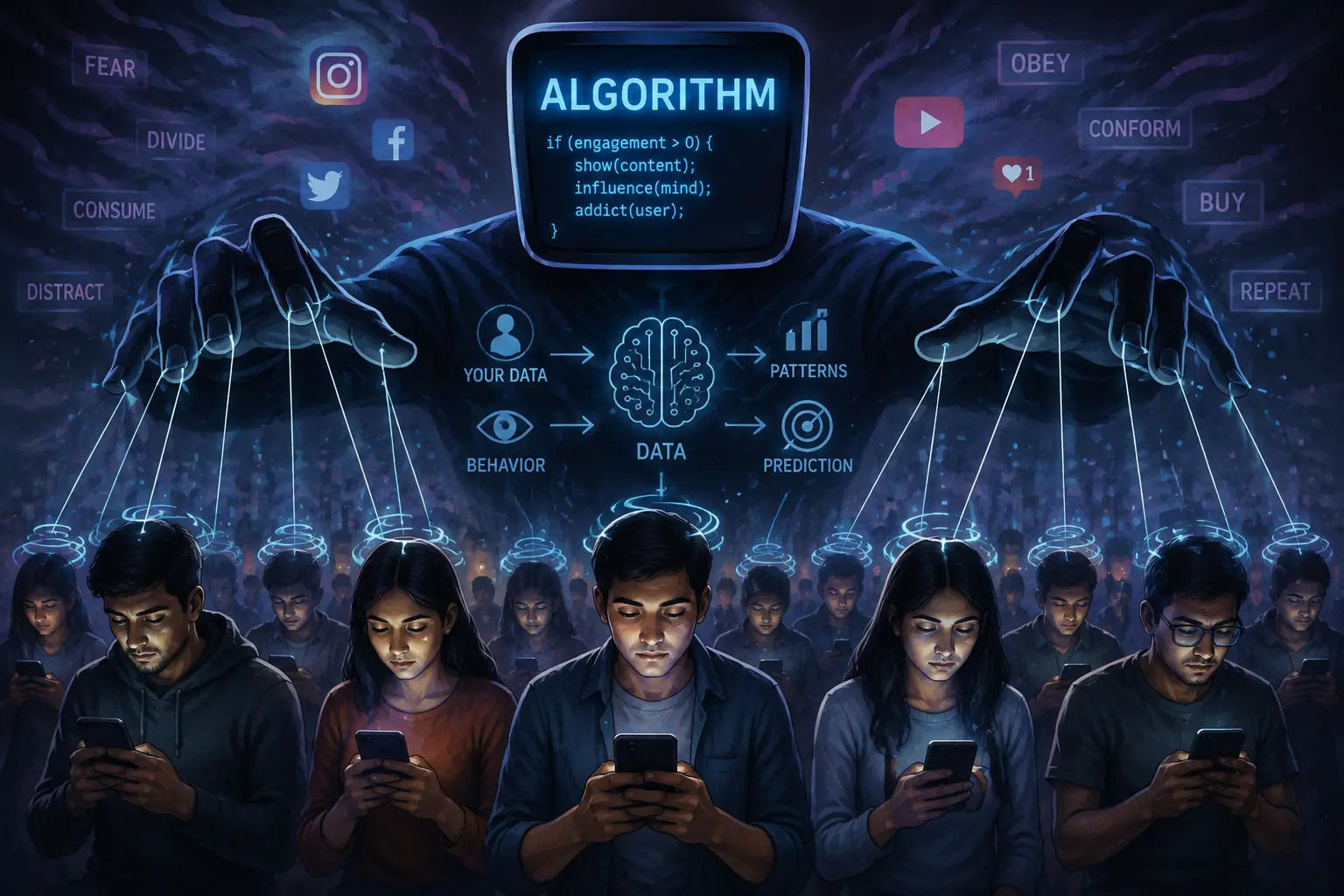
How Social Media Algorithms Create Blind Believers
When someone creates an account on a social network for the first time, that person may not understand how its algorithm works.
If the platform begins bombarding the user with only one side of a political narrative, the user may gradually begin accepting that narrative as the complete truth.
There is no exposure to the opposite side, no balanced discussion, and no encouragement to question what is being shown.
This can eventually turn users into blind believers who lack critical thinking.
The ideologies and information are imposed on the user subconsciously. After repeatedly consuming similar posts, users may begin believing that everything about India is bad.
At the same time, the achievements, progress, and growth that India as a whole has experienced over the last decade are either hidden, ignored, or deliberately downplayed.
The Same Anti-India Narrative Exists on Other Platforms
This problem is not limited to X.
Similar brainwashing and anti-India narratives are being imposed on Indian users through other major social media platforms, including Instagram and Reddit.
The formats may be different, but the pattern appears similar. Users are repeatedly shown negative, provocative, and one-sided content that creates anger and dissatisfaction. The other side of story is shadow banned reducing their reach.
Since these platforms are used mainly by the youth of the country, they enable the systematic brainwashing of India’s future generation.
Young Indians are constantly shown content suggesting that their country has achieved nothing, that everything around them is failing, and that there is nothing worth appreciating about India.
This can make them mentally weak, disconnected from the country’s progress, and ignorant about India’s actual successes.
How Foreign-Controlled Platforms Can Influence Indian Society
Most major social media platforms used in India are controlled by companies located outside the country. When such platforms control what millions of Indians see every day, they gain enormous power over public opinion.
This gives enemy nations and foreign interests leverage to pull strings and manipulate a large section of Indian society.
By influencing what people think, what they become angry about, and what narratives they repeat, these platforms can create social pressure on elected governments.
A sufficiently manipulated population can then be used to pressure governments into bending according to the will of external interests.
This is not merely about political disagreement. It is about who controls the flow of information and how that control can be used against the interests of the country.
Monetization Has Made Content Creators Greedy
The monetization model of social media has made the problem even worse.
Creators on these platforms earn money through views, engagement, shares, reactions, and attention. This has made many of them greedy for visibility.
They are willing to publish anything and everything without significant research, fact-backed studies, or any sense of moral responsibility.
Whether the information is correct is often less important than whether it can become viral.
Provocative content generates anger. Anger generates comments and shares. Comments and shares increase reach. Increased reach generates money.
This is the business model.
Creators know that negative and emotionally charged content attracts more attention, and many of them exploit this behaviour without caring about the damage their content may cause.
Banning Social Media Platforms Is Not a Long-Term Solution
Simply banning or regulating social media platforms, or banning a few specific users, will hold little value in the long term.
New platforms will emerge, new accounts will be created, and the same narratives will continue through different channels.
Instead, accounts that spread fake news and provocative thoughts without substantial evidence should be penalised. Those deliberately creating unrest or spreading misinformation should face consequences according to the Constitution and laws of India.
Freedom of expression should not become a free licence to spread fake news, manipulate society, or provoke people without evidence.
Social Media Platforms Want You to Become Agitated
For those who are on the receiving end of these content, it is important to understand one thing:
These platforms want you to become agitated.
Content creators earn money from your views. They benefit when you become angry, comment on their posts, share their videos, or argue with other users.
Your anger is their source of income.
The more emotionally disturbed you become, the longer you remain on the platform. The longer you remain on the platform, the more advertisements you see and the more money the platform earns.
This is not an accident. This is their business model.
Social media platforms do not merely show you content. They influence what you think, what you believe, what you hate, and how you view your own country.
By controlling the information shown to new and existing users, these platforms can impose one-sided political and social narratives without users even realising it.
They want to control you.
And so far, they appear to be succeeding in their attempts.